

Walk into any pharmacy or health food store and you’ll find entire shelves dedicated to probiotic supplements, each one claiming to contain billions of live cultures that will transform your gut health. But with so many options and so much marketing language, it can be genuinely hard to know what’s worth your money and what’s just expensive marketing.
Let’s break it down clearly.
Probiotics: The Live Bacteria Piece
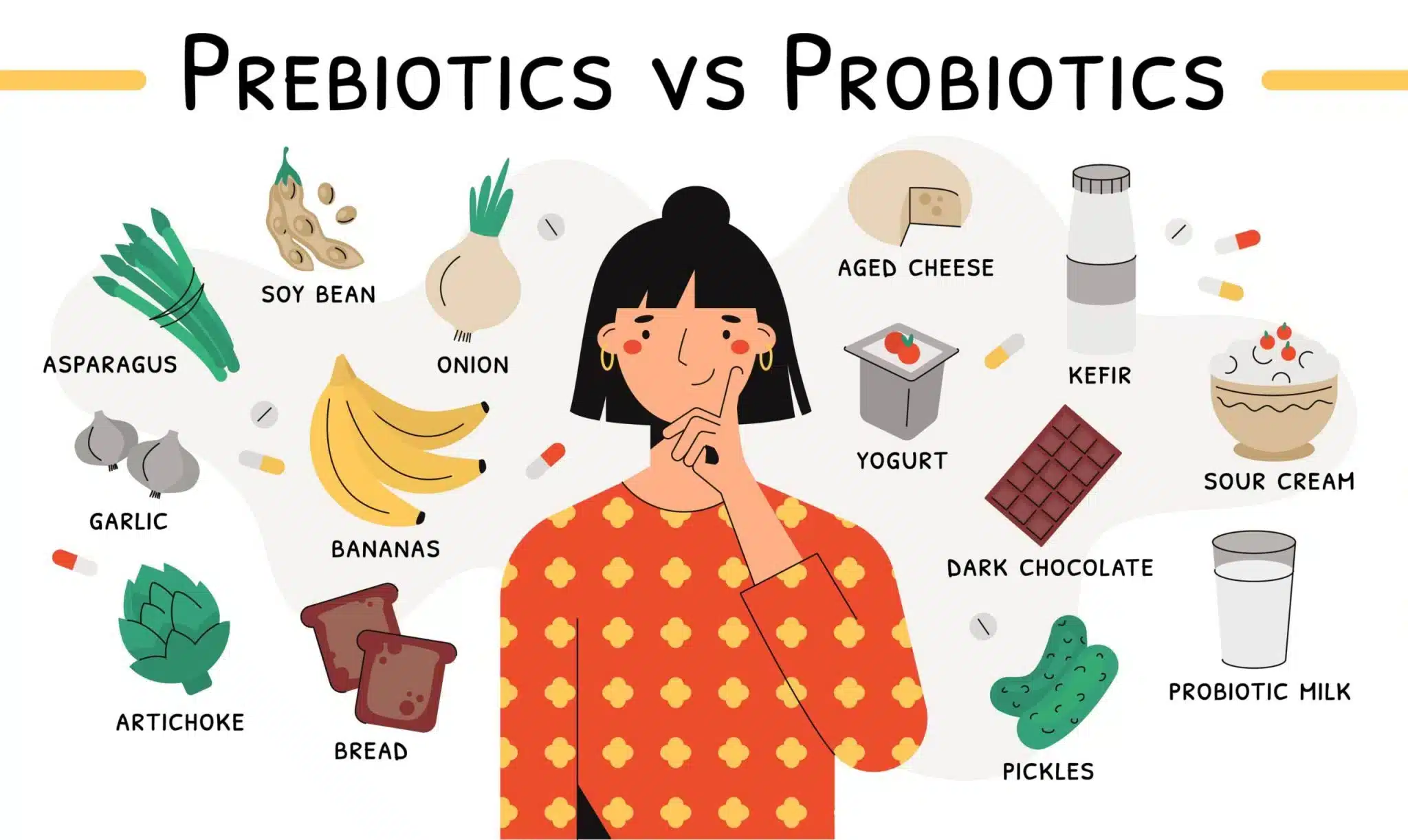
Probiotics are live microorganisms, mostly bacteria, that when consumed in adequate amounts are thought to provide a health benefit. They’re found naturally in fermented foods like yogurt, kefir, sauerkraut, kimchi, miso, tempeh, and kombucha, and they’re also sold in supplement form.
The basic idea is that introducing beneficial bacteria into your gut can support a healthier microbial balance, particularly after disruptions like antibiotic use, illness, or a period of poor diet.
Prebiotics: The Food for the Bacteria
Here’s where many people get confused: prebiotics aren’t bacteria themselves. They’re a type of dietary fiber that serves as food for the beneficial bacteria already living in your gut. In other words, probiotics are the workers, and prebiotics are what you feed them to keep them thriving.
Prebiotic-rich foods include things like garlic, onions, leeks, asparagus, bananas, oats, and Jerusalem artichokes. A diet consistently high in diverse plant foods tends to be naturally rich in prebiotics, which is one reason eating a variety of vegetables and whole grains is so consistently recommended for gut health.
As highlighted in research coverage from <a href=”https://www.healthline.com/nutrition/probiotics-and-prebiotics” target=”_blank” rel=”noopener”>Healthline</a>, synbiotics, products that combine both probiotics and prebiotics, have gained attention because of the potential for the prebiotic component to help the probiotic bacteria survive the journey through the digestive tract and establish more effectively.
Do Probiotic Supplements Actually Work?
This is where it gets nuanced. The short answer is: it depends on the person, the specific condition being addressed, and the specific strains involved.
There’s reasonable evidence supporting the use of specific probiotic strains for particular conditions, such as:
- Reducing the duration of certain types of diarrhea
- Helping restore gut bacteria after antibiotic use
- Managing symptoms of IBS in some individuals
- Supporting vaginal health in women
However, the evidence for more general claims like “supporting overall gut health” or “boosting immunity” in already healthy people is much less clear. The human gut microbiome is incredibly complex and highly individual, and the idea that swallowing a billion bacteria of a specific strain will meaningfully shift that ecosystem in a predictable way is a significant oversimplification.
What the Research Is Still Working Out
One major challenge in probiotic research is that different strains can have very different effects, and studies done on one strain don’t necessarily apply to another, even within the same species. Many supplement labels list impressive-sounding colony counts (CFUs), but count alone doesn’t tell you much about whether those specific strains will survive stomach acid, reach the colon alive, or actually do what the marketing claims.
Research published through <a href=”https://www.ncbi.nlm.nih.gov/pmc/articles/PMC5374383/” target=”_blank” rel=”noopener”>the National Institutes of Health’s PubMed Central</a> has consistently noted that while the field is promising, more rigorous, strain-specific human trials are still needed before broad recommendations can be made for probiotic supplementation in healthy adults.
Food First: The Practical Case
For most people without a specific digestive condition, focusing on getting probiotics and prebiotics through food is a solid, evidence-based approach. Here’s a simple framework:
Probiotic-rich foods to include regularly:
- Plain yogurt with live cultures
- Kefir (dairy or non-dairy)
- Fermented vegetables like kimchi or sauerkraut (unpasteurized, since pasteurization kills the bacteria)
- Miso paste (great in soups and dressings)
Prebiotic-rich foods to prioritize:
- Oats
- Garlic and onions (cook them if raw amounts cause bloating)
- Bananas, especially slightly underripe ones
- Legumes: lentils, chickpeas, black beans
- Asparagus, leeks, and Jerusalem artichokes
When Supplements Might Be Worth Considering
There are situations where supplementing does make more sense:
- After a course of antibiotics, to help restore disrupted gut bacteria (ask your doctor or pharmacist which strains are most relevant)
- If you have a diagnosed condition like IBS, pouchitis, or certain types of diarrhea, where specific strains have better evidence
- If your diet is very limited in fermented or high-fiber foods and you’re unlikely to change that significantly
If you do choose a supplement, look for products that specify the strain (genus, species, and ideally strain designation), have a reasonable CFU count at time of expiration rather than manufacture, and are stored appropriately since many probiotics are sensitive to heat.
The Bottom Line
Probiotics and prebiotics are genuinely interesting areas of science with real potential benefits, but the supplement industry has run significantly ahead of what the research actually supports for general use. For most people, the most meaningful investments are dietary: eating more fermented foods, diversifying plant intake, and reducing ultra-processed food consumption. Supplements can fill gaps in specific situations, but they’re rarely necessary as a starting point.
This article is for general informational purposes only. Before starting any supplement, including probiotics, speak with a healthcare provider, especially if you have an underlying health condition or take medications.